
Share
Emotional Vulnerability and Relationships Before Valentine’s Day
Valentine’s Day has a way of quietly amplifying emotions. Even if you don’t actively celebrate it, the days leading up to February 14 can leave you feeling more sensitive, reflective, or emotionally raw than usual. You might find yourself overthinking relationships, feeling unusually tearful, or reacting more strongly to small things. If this sounds familiar, there’s a reason for it—and it’s not because you’re being dramatic.
For many people, emotional sensitivity before Valentine’s Day is the result of hormonal changes, emotional expectations, and cultural pressure colliding at the same time.
The Subtle Pressure of Valentine’s Day
Valentine’s Day is framed as a celebration of love, but it also comes with unspoken expectations. Romance, affection, gifts, and grand gestures are everywhere—on social media, in advertisements, and in everyday conversations. Even if you don’t buy into the hype, constant exposure can trigger comparison and self-reflection.
You may start questioning where you stand in your relationship, revisiting past heartbreaks, or wondering whether you’re “behind” in some way. This doesn’t mean you’re unhappy with your life. It simply means Valentine’s Day acts like an emotional magnifying glass, bringing feelings to the surface that usually stay quieter.
Hormones Can Heighten Emotional Sensitivity
For many people who menstruate, Valentine’s Day often falls during the luteal phase of the menstrual cycle—the time after ovulation and before your period begins. During this phase, estrogen levels drop while progesterone rises, which can affect mood-regulating brain chemicals like serotonin.
According to the Mayo Clinic, these hormonal shifts are a key reason many people experience mood changes, irritability, and emotional sensitivity as part of PMS. Learning more about the hormonal side of this experience, such as through resources on premenstrual syndrome (PMS) symptoms and causes, can be deeply validating—because it confirms that these emotional changes are physiological, not imagined.
When emotions feel heavier before Valentine’s Day, it’s often because your body is already in a more sensitive state.
Why Emotions Feel Bigger Around Love-Focused Holidays
Valentine’s Day revolves around connection, intimacy, and belonging—topics that naturally carry emotional weight. When those themes are everywhere, your nervous system may become more alert and reactive, especially if you’re already stressed, tired, or emotionally depleted.
The American Psychological Association explains that stress and anticipation tend to intensify emotions that already exist. Reading about how stress affects emotions and behavior helps explain why Valentine’s Day doesn’t create new feelings, but instead brings unresolved ones to the surface.
This is why even people who are generally emotionally stable may feel more vulnerable during this time.
Relationships Can Feel More Fragile or More Important
If you’re in a relationship, you may notice a stronger need for reassurance, closeness, or emotional clarity before Valentine’s Day. If you’re single, feelings of loneliness or self-doubt can appear more easily—even if you’re usually content on your own.
During the luteal phase, emotional tolerance tends to be lower and sensitivity to connection is higher. Small misunderstandings can feel bigger, and unmet expectations can feel more personal. This doesn’t mean something is wrong with your relationship or your emotional health. It often means your body is asking for more care, safety, and understanding.
Supporting Emotional Balance Instead of Fighting It
Trying to suppress emotions during this time often backfires. Supporting your body and nervous system is usually far more effective.
Simple, supportive habits can include:
- Getting enough rest and sleep
- Eating regular, nourishing meals
- Choosing gentle movement over intense workouts
- Limiting caffeine and sugar, which can increase anxiety
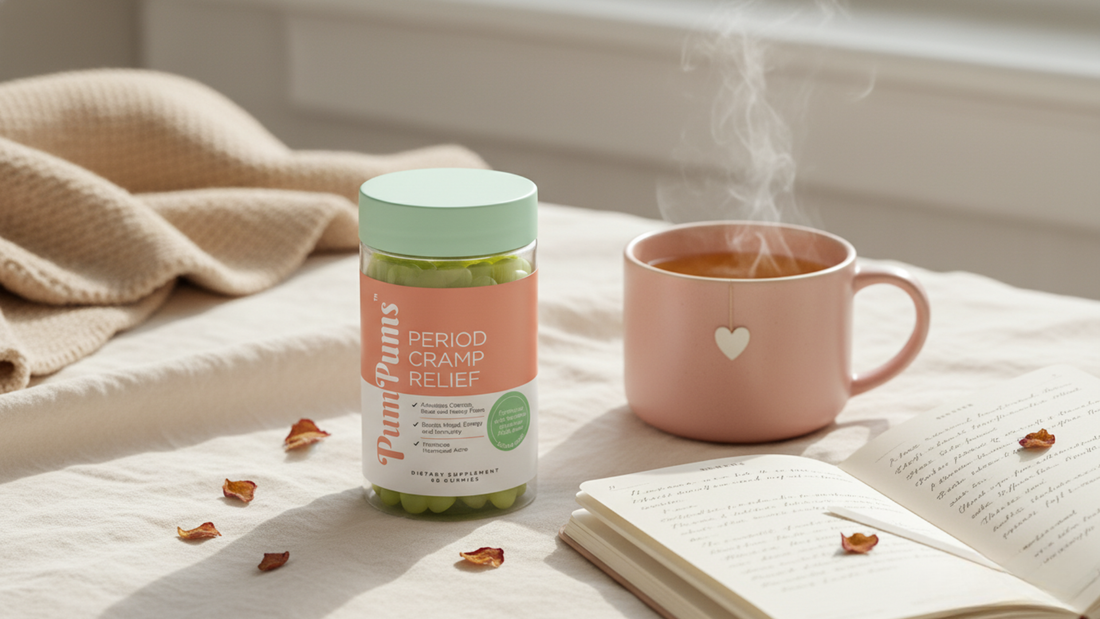
Some people also find it helpful to use targeted, cycle-aware support designed for PMS-related emotional changes. For example, PumPums offers natural PMS support for emotional sensitivity, formulated with plant-based ingredients to help support mood and hormonal balance during the more vulnerable phases of the cycle.
The goal isn’t to “fix” your emotions, but to help your body feel supported enough that emotions don’t feel overwhelming.
Reframing Valentine’s Day as a Gentle Check-In
Valentine’s Day doesn’t need to be a measure of your worth, happiness, or relationship success. Instead, it can be a pause—a moment to check in with how you’re actually feeling.
Rather than asking why you’re so emotional, it can be more helpful to ask what your body needs right now. Sometimes the answer is rest. Sometimes it’s reassurance. Sometimes it’s simply permission to feel without judgment.
You’re Not Too Emotional—You’re Responding to Real Signals
Feeling more sensitive or emotional before Valentine’s Day is a natural response to hormonal changes, emotional themes, and cultural pressure all happening at once. It’s not weakness—it’s awareness.
When you understand what’s happening in your body and give yourself the support you need, this season can feel less overwhelming and more compassionate. And that, in itself, is a meaningful form of love.


