
Share
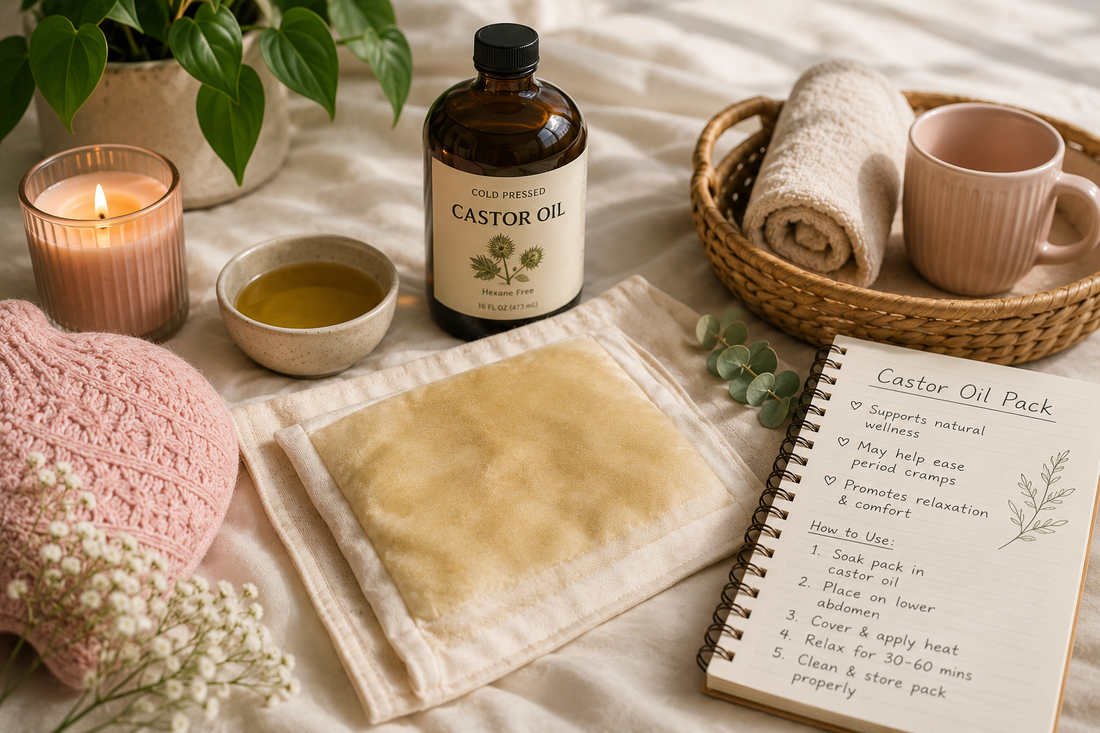
a castor oil pack is a cloth soaked in castor oil, applied to the lower abdomen with heat, traditionally used to support circulation and ease tension before or after your period. Evidence is mostly anecdotal rather than clinical, and most practitioners advise against using them during active bleeding, since castor oil may stimulate uterine contractions and increase flow.
Castor oil packs have circulated in natural wellness circles for decades, and they're having a fresh moment thanks to social media. But between the wellness hype and legitimate caution around using them during your period, it's worth understanding exactly what they do — and don't — do.
What Is a Castor Oil Pack?
A castor oil pack is a piece of natural fabric (usually flannel or wool) saturated with castor oil and placed against the skin, typically over the lower abdomen, with a heat source layered on top. Castor oil comes from the seeds of the castor plant and has long been used topically in traditional and folk medicine, often described as having warming and circulation-supporting properties. Some people use it for general pelvic comfort, others for perceived detox support (a claim not supported by clinical evidence, since the liver and kidneys handle detoxification on their own).
How to Use a Castor Oil Pack: Step-by-Step
- Gather your materials. You'll need a piece of unbleached cotton or wool flannel, cold-pressed castor oil, a heat source (heating pad or hot water bottle), plastic wrap or an old towel to protect surfaces, and a timer.
- Saturate the cloth. Fold the flannel into a few layers and soak it thoroughly with castor oil until damp but not dripping.
- Apply to the lower abdomen. Lie down and place the soaked cloth over your lower belly, roughly where you feel cramping tension.
- Cover and add heat. Place plastic wrap or a towel over the cloth to protect bedding, then add a heating pad or hot water bottle on top set to a comfortable, low-to-medium temperature.
- Rest for 30–45 minutes. Stay reclined and relaxed; this is a good moment to pair with slow breathing or a short meditation.
- Store or discard. The same cloth can typically be reused several times if stored in a sealed container in the fridge; discard if it starts to smell rancid.
- Cleanse skin afterward. Gently wipe off residual oil, since castor oil is thick and can stain clothing or bedding if not cleaned up.
Before vs. During Your Period: An Important Safety Nuance
This is the detail most castor-oil-pack tutorials skip: many practitioners specifically advise against using a castor oil pack during active bleeding. Castor oil is thought to activate prostaglandin receptors and has traditionally been used to stimulate uterine contractions — it's the same compound sometimes referenced in discussions of labor induction. Applied during your period, this stimulating effect could potentially increase menstrual flow or intensify cramping rather than easing it.
The safer window, according to most integrative practitioners, is in the days before your period starts (during your luteal phase) or after your period ends (during your follicular phase), when you're not actively bleeding. If you want abdominal heat relief specifically during your period, a heating pad or an adhesive cramp patch delivers similar warming comfort without the same caution flag — see our comparison of heating pads, cramp patches, and TENS units for a mess-free alternative you can use any day of your cycle.
What Evidence Says vs. What's Anecdotal
It's worth being honest here: there is limited robust clinical research directly testing castor oil packs for menstrual cramps. Most of what circulates is traditional use and personal testimony rather than controlled trials. Some clinicians note that the warming effect of the heat source layered on top may be doing much of the work — heat therapy on its own has real research support for easing dysmenorrhea, as shown in a systematic review of six randomized trials that found heat therapy performed comparably to over-the-counter pain relievers for menstrual pain (Scientific Reports, 2018). That doesn't mean castor oil adds nothing, but it does mean the heat itself is the more evidence-backed part of the ritual.


