
Share
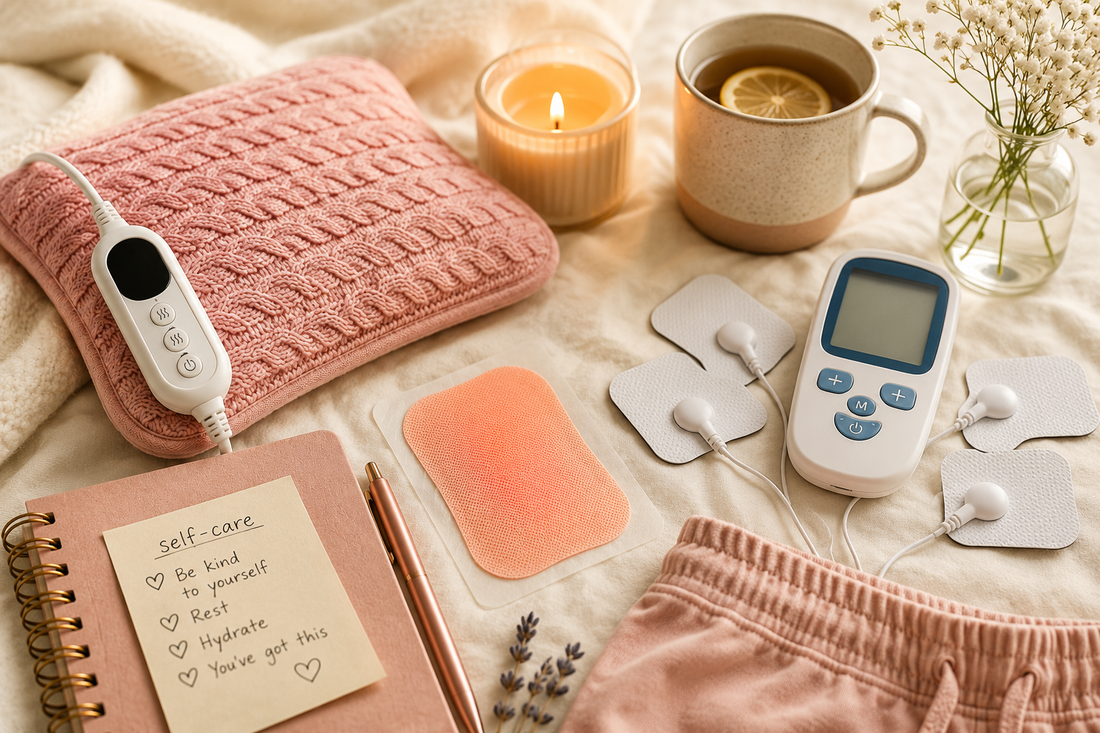
All three can help, but they work differently. Heating pads deliver the strongest, most consistent relief at home and are backed by the most research; cramp patches offer the same heat therapy in a discreet, wearable form for school or work; and TENS units are best for women who want a drug-free option they can adjust in real time and reuse indefinitely.
If you've stood in the period-care aisle wondering which of these three to grab, you're not alone. Each one targets the same problem — uterine muscle cramping and reduced pelvic blood flow — through a different mechanism. Here's how they actually compare, what the research says, and how to choose (or combine) them.
How Heat Therapy Works for Period Cramps
Heat relaxes the uterine muscle, improves local blood circulation, and reduces the nerve compression that makes cramps feel sharper. A systematic review and meta-analysis published in Scientific Reports looked at six randomized controlled trials and found that heat therapy performed favorably compared with both placebo and no treatment, and that in several trials it matched the pain relief of over-the-counter analgesics with a better safety profile (Scientific Reports, 2018). The ideal application temperature is around 104–113°F (40–45°C), and both traditional heating pads and adhesive heat patches use this same principle.
Where they differ is delivery. A heating pad is typically an electric or microwavable device you use while lying down. A cramp patch is a thin, adhesive, air-activated heat pack you stick directly to your lower abdomen or lower back under clothing, so it works while you're sitting in class, at a desk, or running errands.
What's Actually in a Cramp Patch?
Most adhesive heat patches use an air-activated iron oxidation reaction (similar to hand warmers) sealed inside a breathable, skin-safe adhesive layer. Once exposed to oxygen, they generate low, steady heat for 6–12 hours. Because there's no cord, battery, or reheating required, they're the most portable of the three options — which is exactly why LovePumPums built our Daily Cycle Essentials line around comfort items designed for on-the-go relief you can wear discreetly under everyday clothing.
How a TENS Unit Works
A TENS (transcutaneous electrical nerve stimulation) unit sends low-voltage electrical pulses through adhesive pads placed on the skin. These pulses are thought to interrupt pain signals traveling to the brain and may also trigger the release of endorphins. Cleveland Clinic notes that while more research is still needed to fully understand how and when TENS works best, it's a low-risk option worth trying for both short-term and long-term pain (Cleveland Clinic). Evidence specific to period pain is mixed — some studies show meaningful pain reduction, especially with high-frequency settings (50–120 Hz) used for at least 30 minutes, while others find effects close to placebo. Some users report being able to reduce their reliance on pain-relief pills when using TENS consistently.
Comparison Table: Heating Pad vs. Cramp Patch vs. TENS Unit
| Factor | Heating Pad | Cramp Patch | TENS Unit |
|---|---|---|---|
| Cost | $15–$40 (one-time) | $1–$3 per patch (recurring) | $20–$60 (one-time) |
| Discreteness | Low — best for home/couch use | High — wearable under clothes | Moderate — small device, visible pads/wires |
| Reusability | High (reusable device) | Low (single-use, disposable) | High (reusable device, disposable pads) |
| Onset speed | Fast (minutes) | Moderate (15–30 min to activate) | Fast, but effect builds over 30+ minutes |
| Best for | Relief at home, overnight use | School, work, travel, discretion | Drug-free, adjustable, repeat use |
| Evidence strength | Strongest (multiple RCTs) | Same mechanism as heating pad | Mixed, promising for some users |
Can You Combine These Methods?
Yes, and many women do. A common approach is wearing a cramp patch during the day for continuous, low-level heat, then switching to a heating pad or TENS unit at night when you're stationary and can use a stronger setting. Because heat and electrical stimulation work through different pathways, layering them doesn't reduce effectiveness — just avoid placing a TENS pad directly under an active heat patch, since heat can affect adhesive electrode contact. If you're also using the best magnesium type for period cramps as a supplement layer, these physical relief methods can work alongside it rather than instead of it.


