
How Pickle Juice Might Help Relieve Menstrual Cramps
What Is Happening in Your Body When Period Cramps Strike
To understand whether pickle juice helps, you first need to understand what you are trying to fix. Menstrual cramps — clinically called dysmenorrhea — occur when the uterus contracts to expel its lining. These contractions are driven by prostaglandins, hormone-like compounds that trigger both muscle spasms and systemic inflammation.
According to the American College of Obstetricians and Gynecologists (ACOG), nearly 90% of women report experiencing cramping, particularly during the first one to two days of their cycle. The more prostaglandins your body produces, the more intense and prolonged the cramping. Common symptoms include throbbing or aching in the lower abdomen and back, nausea, fatigue, bloating, digestive upset, and mood changes — all stemming from the same hormonal inflammatory cascade.
This distinction matters because it defines what pickle juice can and cannot do. It does not suppress prostaglandin production — that requires magnesium, omega-3s, NSAIDs, or anti-inflammatory botanicals. What it does do is act directly and rapidly on the cramping muscle itself through a different mechanism entirely.
The Fast-Acting Science Behind Pickle Juice and Muscle Cramps
The most significant evidence for pickle juice as a cramp remedy comes from a 2010 study published in Medicine & Science in Sports & Exercise. Researchers found that pickle juice inhibited electrically induced muscle cramps approximately 45% faster than water — and the relief began before the juice could have been digested or absorbed into the bloodstream.
This finding pointed to a neurological rather than nutritional mechanism. Acetic acid — the primary compound in vinegar — activates receptors in the mouth and throat that send rapid signals through the nervous system. This triggers a reflex that inhibits the alpha motor neurons responsible for sustaining the muscle cramp, effectively telling the muscle to release its contraction.
The reflex acts within 30 to 90 seconds of consumption. That speed is what distinguishes pickle juice from electrolyte drinks or magnesium supplements, both of which require digestion and absorption before taking effect.
The study was conducted on skeletal muscles in athletes rather than uterine smooth muscle. However, the uterus shares the same fundamental neural and muscular contraction pathways. The neurological inhibition reflex is physiologically applicable to dysmenorrhea, making the mechanism scientifically plausible even without a dedicated menstrual cramp study to date.

What Pickle Juice Actually Does for Period Pain
Based on what the research supports, pickle juice addresses menstrual cramp relief through three distinct pathways.
Neurological reflex inhibition is the primary and fastest-acting mechanism. As described above, acetic acid triggers a nervous system reflex that can quiet involuntary muscle contractions — including uterine contractions — within seconds of consumption. This is the mechanism most relevant to acute cramping relief.
Electrolyte restoration plays a supporting role. Menstruation disrupts fluid and mineral balance, particularly when accompanied by diarrhea, heavy flow, or sweating. A 1–2 oz serving of pickle juice provides approximately 500–700 mg of sodium alongside smaller amounts of potassium and magnesium — electrolytes essential for normal muscle function. When these minerals are depleted, muscles become more prone to involuntary contraction and cramping.
Digestive and gut support is the third pathway, particularly relevant to fermented pickle juice containing live cultures. A 2019 paper published in Nutrients found that women with more diverse gut microbiomes experienced significantly fewer and less severe PMS symptoms. The gut estrobolome — bacteria responsible for metabolizing estrogen — directly influences circulating hormone levels. Fermented pickle brine supports this microbiome, contributing to hormonal balance and reduced systemic inflammation over time.
When Pickle Juice Is Most and Least Helpful
Pickle juice tends to be most effective when cramping is accompanied by dehydration, electrolyte imbalance from diarrhea or heavy flow, back or leg muscle spasms alongside uterine cramps, or bloating and digestive discomfort.
It is less likely to provide meaningful relief when cramping is primarily prostaglandin-driven without an electrolyte component, when consumed in large quantities that introduce excess sodium, or when used as a substitute for targeted anti-inflammatory treatment in cases of severe dysmenorrhea.
The most important variable is timing. Consuming 1–2 oz at the very first sign of cramping — before pain has peaked — gives the neurological reflex the best chance of intercepting the contraction cycle early.
Choosing the Right Pickle Juice
Not all pickle juice delivers the same benefits. Standard supermarket dill pickles are made with distilled vinegar and heat processing. They provide acetic acid and sodium but contain no live cultures and offer no probiotic benefit.
For maximum period relief benefit, look for organic, naturally fermented pickle juice made with apple cider vinegar rather than distilled white vinegar. Choose products free from artificial dyes, preservatives, and high-fructose corn syrup. Labels that say "naturally fermented," "raw," or "contains live cultures" indicate that probiotics are present.
Avoid high-sodium commercial brines if you have blood pressure concerns or are already prone to significant water retention. Start with 1 oz to assess your tolerance before increasing to 2 oz.
Getting Pickle Juice Benefits Without the Taste or Sodium Load
For people who find the taste, acidity, or sodium content of straight pickle juice difficult to manage — particularly during an already uncomfortable period — a targeted supplement offers a practical alternative.
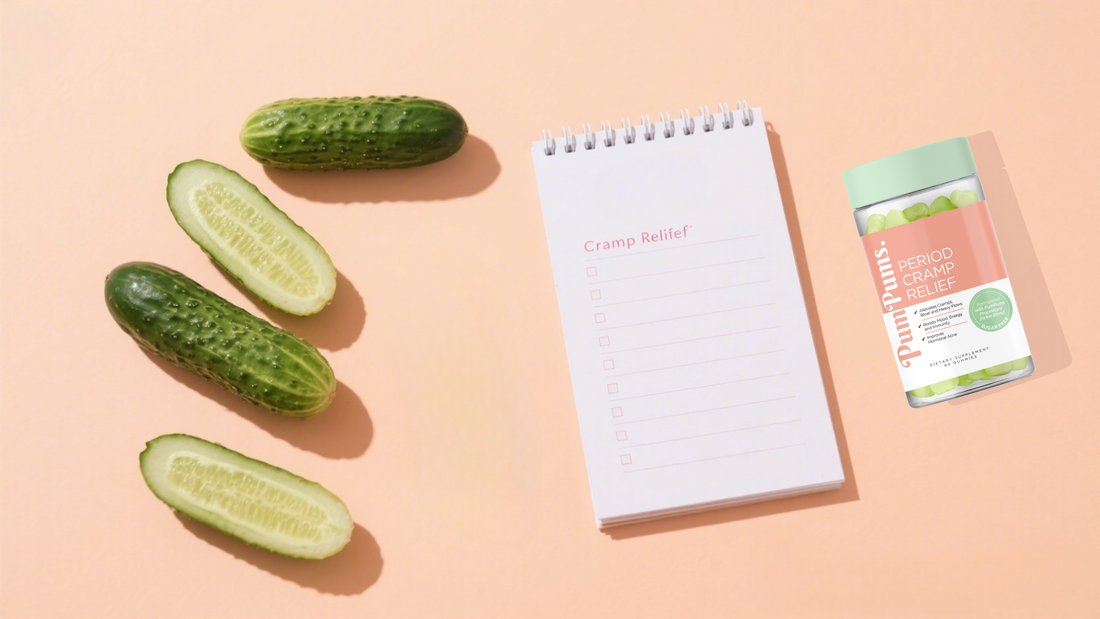
PumPums Period Cramp Relief is the first supplement specifically formulated to deliver pickle juice extract for menstrual cramp relief. Its Proprietary Pickle+ Blend combines fermented cucumber extract and organic apple cider vinegar — preserving the acetic acid neurological mechanism — alongside a complete suite of clinically studied cycle-support ingredients.
Magnesium glycinate addresses the root cause of cramping at the hormonal level. Research published in Magnesium Research (2017) confirmed that magnesium supplementation significantly reduces dysmenorrhea by relaxing uterine smooth muscle and decreasing prostaglandin overproduction — something pickle juice alone cannot achieve.
Chasteberry (Vitex agnus-castus), reviewed in Planta Medica, regulates prolactin and supports luteal phase hormonal balance, reducing the severity of PMS symptoms including cramping and breast tenderness.
Vitamin B6 has been demonstrated in a British Medical Journal meta-analysis to significantly outperform placebo in reducing PMS symptoms including pain, irritability, and fatigue.
Ginger and turmeric extracts provide anti-inflammatory support by reducing prostaglandin synthesis — directly targeting the hormonal driver of menstrual pain that pickle juice does not address.
Free from added sugar, artificial additives, caffeine, and stimulants, PumPums delivers targeted daily relief without the sodium burden, strong taste, or inconsistency of drinking pickle brine. Taken consistently across your cycle, the cumulative anti-inflammatory and hormonal support builds meaningfully over time — reducing the intensity of cramps before they start rather than simply reacting to them after they arrive.

Other Natural Remedies That Work Alongside Pickle Juice
A complete period relief strategy addresses both the acute cramping moment and the hormonal environment that creates it. These evidence-based options complement pickle juice and targeted supplementation effectively.
Heat therapy applied to the lower abdomen promotes blood flow and relaxes uterine muscle. A study in Evidence-Based Nursing found continuous low-level heat to be as effective as ibuprofen for menstrual cramp relief.
Ginger consumed at 750–2,000 mg per day was found in a 2015 Pain Medicine randomized controlled trial to be as effective as ibuprofen and mefenamic acid for reducing primary dysmenorrhea severity.
Omega-3 fatty acids from fatty fish, walnuts, and flaxseed reduce prostaglandin production over time, addressing cramping at its hormonal source.
Magnesium-rich foods including spinach, pumpkin seeds, almonds, and dark chocolate support uterine muscle relaxation and mood stability throughout the luteal phase.
Gentle movement such as walking or yoga stimulates endorphin release and improves pelvic circulation, reducing both pain perception and cramping duration according to a 2020 review in BMC Women's Health.

So Will Pickle Juice Get Rid of Period Cramps?
Not entirely — but it will meaningfully reduce them, particularly at the acute onset of cramping. The neurological reflex triggered by acetic acid is real, fast-acting, and scientifically plausible for uterine smooth muscle. The electrolyte content supports fluid balance during menstruation. And fermented varieties contribute to the gut microbiome balance that influences PMS severity over time.
What pickle juice cannot do is suppress prostaglandin production, provide the magnesium your body needs, or deliver the hormonal support required for consistent cycle-wide relief. That is where PumPums Period Cramp Relief completes the picture — combining the pickle-based mechanism with the full nutritional and botanical support your cycle actually demands.
Used together, they represent a fast-acting and comprehensive approach to period pain — one that works with your body's biology rather than simply masking what it is trying to tell you.


