
What Causes Sugar and Gummy Cravings Before and During Periods?

What Causes Food Cravings Before and During Your Period?
Cravings most commonly emerge during the luteal phase — the 7 to 10 days between ovulation and the start of menstruation. During this window, estrogen drops, progesterone rises, and serotonin levels — the neurotransmitter most associated with mood stability and wellbeing — decline significantly.
This hormonal shift has a direct effect on appetite. A study published in Appetite found that up to 97% of women report experiencing food cravings, with sweet foods being the most frequently desired. The drop in estrogen during the late luteal phase is particularly relevant: estrogen normally supports serotonin production, so as estrogen falls, the brain begins seeking fast dietary routes to restore serotonin, primarily through sugar and simple carbohydrates.
Gummies, in particular, satisfy multiple cravings at once: rapid sugar release, comforting texture, ease of consumption, and the sensory satisfaction of chewing — which research suggests may physically relieve tension and irritability common during PMS.
The Serotonin-Sugar Connection
The craving for sweets during PMS is not a lack of willpower — it is a neurochemical response. When serotonin levels fall, the brain actively seeks glucose-rich foods because carbohydrates trigger a temporary spike in serotonin synthesis, producing a short-term mood lift.
According to research from MIT, carbohydrate consumption increases the brain's uptake of tryptophan — the amino acid precursor to serotonin. This explains why sweet, starchy foods feel genuinely mood-lifting in the moment, even if the effect is short-lived.
Hormonal changes during the luteal phase also affect insulin sensitivity, causing temporary fluctuations in blood glucose regulation. This creates a cycle: blood sugar drops, the brain signals for a fast energy source, and sugar cravings intensify. Without stable blood sugar, cravings become harder to ignore and easier to overindulge.

Is Magnesium Deficiency Making Your Cravings Worse?
One of the most overlooked drivers of period cravings is magnesium deficiency. Magnesium levels naturally decline during the luteal phase, and low magnesium has a direct impact on mood, muscle function, and blood sugar regulation.
A review published in Nutrients (2017) found that magnesium supplementation significantly reduced premenstrual symptoms including mood swings, irritability, bloating, and — importantly — sugar cravings. Magnesium supports the production of dopamine and serotonin, helps stabilize insulin sensitivity, and relaxes smooth muscle, making it one of the most broadly useful nutrients for cycle support.
Symptoms that may indicate low magnesium before your period include muscle cramps, headaches, anxiety, sleep disruption, and intense cravings for sweets. These often appear together because they share the same underlying deficiency.
Magnesium-rich foods that can help in the days leading up to your period include pumpkin seeds, almonds, spinach, dark chocolate, and avocado.
Can Low Iron Levels Cause Sweet Cravings?
Yes — and this connection is frequently underestimated. During menstruation, particularly with a heavier flow, iron is lost through blood. Low iron leads to fatigue and reduced oxygen delivery to the brain, which responds by seeking fast energy sources — usually sugar.
The Centers for Disease Control and Prevention (CDC) estimates that nearly 10% of menstruating women in the United States have iron deficiency. Symptoms that may accompany iron-related cravings include persistent fatigue, brain fog, pale skin, and shortness of breath. If your cravings are consistently accompanied by these signs, it's worth asking your healthcare provider for a ferritin test to assess your iron stores.
Iron-supportive foods to incorporate around your period include lentils, dark leafy greens, lean red meat, dark chocolate, and dried apricots — many of which also happen to satisfy the craving for something rich and satisfying.
Why Gummies Specifically?
The appeal of gummies goes beyond sugar content. They offer a specific combination of sensory benefits that align with what the body and mind are seeking during PMS and menstruation: immediate sugar delivery, satisfying chewiness, small portion format, and comfort association.
Research on stress and oral motor behavior suggests that the act of chewing itself can reduce cortisol levels and release physical tension. During a period when anxiety, jaw clenching, and irritability are common, the repetitive chewing of a gummy provides a mild but real form of sensory regulation.
The problem with conventional candy gummies is the trade-off: you get the sensory satisfaction but also the sugar crash, the artificial dyes, and none of the nutritional support your body actually needs.
Functional Gummies for Period Support
This is where the conversation around period cravings intersects with smart supplementation. Rather than fighting the craving entirely — which is both difficult and unnecessary — redirecting it toward a functional option gives your body what it's genuinely asking for.
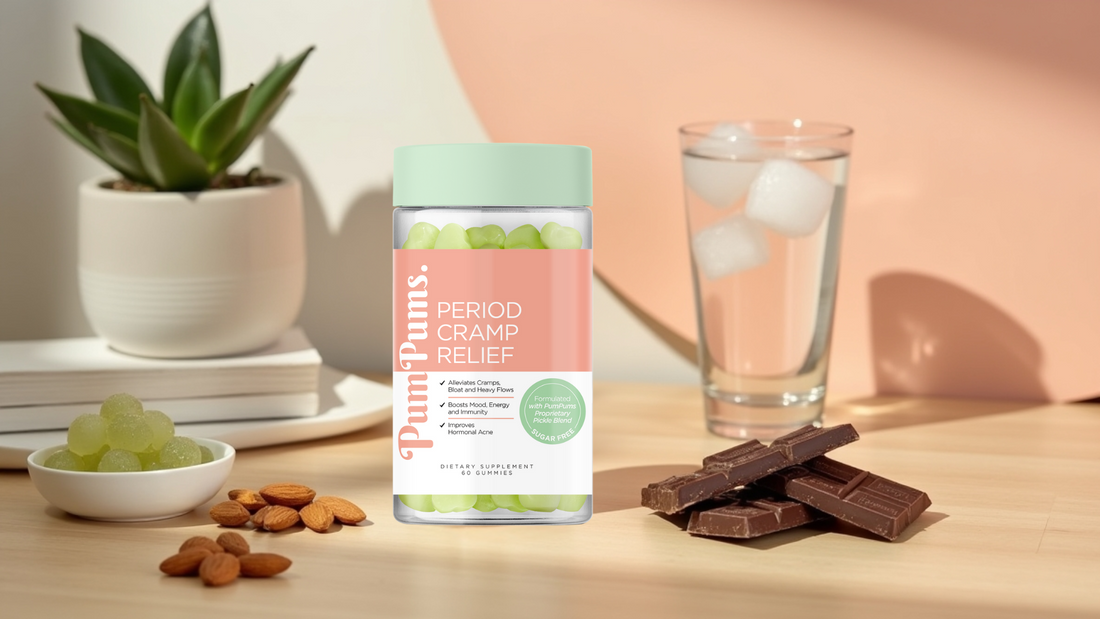
PumPums Period Cramp Relief gummies are formulated specifically for this purpose. They deliver the chewy, satisfying experience your body craves during the luteal phase while providing clinically studied ingredients that address the root causes of PMS symptoms — not just the surface-level craving.
Key ingredients should be in your period cramp relief and what the research says:
- Magnesium: Shown in Magnesium Research (2017) to reduce dysmenorrhea, mood swings, and PMS symptoms when taken consistently. Addresses the magnesium depletion that drives cravings and cramping.
- Vitamin B6: A meta-analysis published in the British Medical Journal found that B6 supplementation at 50–100 mg/day is significantly more effective than placebo in relieving PMS symptoms including depression, irritability, and fatigue.
- Chasteberry (Vitex agnus-castus): Reviewed in Planta Medica for its ability to regulate prolactin and support hormonal balance during the luteal phase, reducing breast tenderness, mood disturbance, and cramp intensity.
- Ginger and turmeric extracts: Anti-inflammatory compounds that reduce prostaglandin-driven cramping and systemic discomfort.
Free from added sugar, artificial additives, caffeine, and stimulants, PumPums gummies satisfy the craving for something chewy and pleasant while simultaneously delivering targeted nutritional support for your cycle. Taken daily — particularly starting in the luteal phase — they work cumulatively to reduce the intensity of cravings, cramps, bloating, and mood instability over time.

How to Reduce Period Cravings Naturally
Beyond supplementation, several evidence-based lifestyle habits can meaningfully reduce the intensity of luteal phase cravings:
Eat balanced meals consistently. Protein, healthy fats, and complex carbohydrates at every meal stabilize blood sugar and reduce the spikes and crashes that trigger intense sugar cravings. Skipping meals during your period is one of the most reliable ways to make cravings worse.
Prioritize magnesium and B6 in the week before your period. Whether through food or a supplement like PumPums, these two nutrients directly address the deficiencies most associated with PMS cravings and mood changes.
Stay hydrated. Dehydration is frequently mistaken for hunger and can amplify cravings. Water, herbal tea, and electrolyte drinks all support fluid balance during menstruation.
Move your body. Even light aerobic exercise increases endorphin and serotonin activity, reducing the brain's demand for sugar-induced mood elevation. A 2020 review in BMC Women's Health confirmed that regular moderate exercise significantly reduces PMS symptoms including mood disturbance and fatigue.
Prioritize sleep. Poor sleep during the luteal phase directly disrupts leptin and ghrelin — the hormones that regulate hunger and satiety — making cravings more intense and harder to manage.
When Are Period Cravings a Concern?
Mild to moderate cravings before and during your period are normal and biologically driven. However, consult a healthcare provider if cravings are severe or feel uncontrollable, are accompanied by dizziness, weakness, or significant fatigue, persist throughout the entire month rather than cycling with your period, or are triggering patterns of emotional or binge eating.
Persistent intense cravings can sometimes signal insulin resistance, significant iron deficiency, or underlying hormonal imbalance — all of which are addressable with proper diagnosis and support.
Period cravings are not a character flaw or a lack of discipline. They are your body's response to real hormonal, neurochemical, and nutritional shifts. By understanding what's driving them and responding with targeted support including a clean, functional supplement like PumPums Period Cramp Relief you can satisfy what your body is asking for while genuinely supporting your cycle health.


