
Share
What Are Period Self-Care Essentials?
Period self-care essentials are the products, supplements, and habits that help you manage symptoms across your entire menstrual cycle—not just the days you're bleeding. The best approach combines period pain relief products that address cramps directly with cycle support supplements that work on the hormonal root causes of PMS, fatigue, and mood shifts. Done right, your period self-care routine can reduce the worst symptoms significantly without relying solely on over-the-counter painkillers.
Why Period Care Has Changed in 2026
For most of recent history, "period care" meant a heating pad and ibuprofen. That's still fine—but it's no longer the full picture.
Research now shows that hormone changes spring (specifically the estrogen and progesterone fluctuations that peak in spring due to seasonal light shifts) can intensify PMS symptoms for many people. Add in chronic stress and its documented impact on the menstrual cycle—elevated cortisol disrupts progesterone balance, which worsens cramping and irritability—and it's clear that managing your cycle requires a more layered strategy.
The market has responded. The best PMS relief products available today are formulated with clinically studied ingredients, not just herbal filler. And consumers are smarter: searches for best period gummies 2026 and natural cramp relief supplements are up sharply, reflecting a real shift toward targeted, food-first solutions.
PMS vs. PMDD: Know the Difference
Before building your period self-care routine, it helps to understand what you're managing.
PMS (Premenstrual Syndrome) affects an estimated 3 in 4 menstruating people in the U.S. Symptoms—bloating, cramps, mood swings, fatigue—typically arrive 1–2 weeks before your period and resolve once bleeding begins.
PMDD (Premenstrual Dysphoric Disorder) is more severe. It involves significant depression, anxiety, or anger that interferes with daily functioning. PMDD affects roughly 3–8% of menstruating people and often requires medical management beyond supplements.
If your symptoms consistently disrupt work, relationships, or daily life, talk to your OB-GYN or primary care provider before relying on self-care products alone.
Your Step-by-Step Period Self-Care Routine
Step 1: Address Cramps Directly with the Right Relief Product
Cramps happen when the uterine lining releases prostaglandins—hormone-like compounds that trigger muscle contractions. The fastest, most effective first response is a product that targets this mechanism.
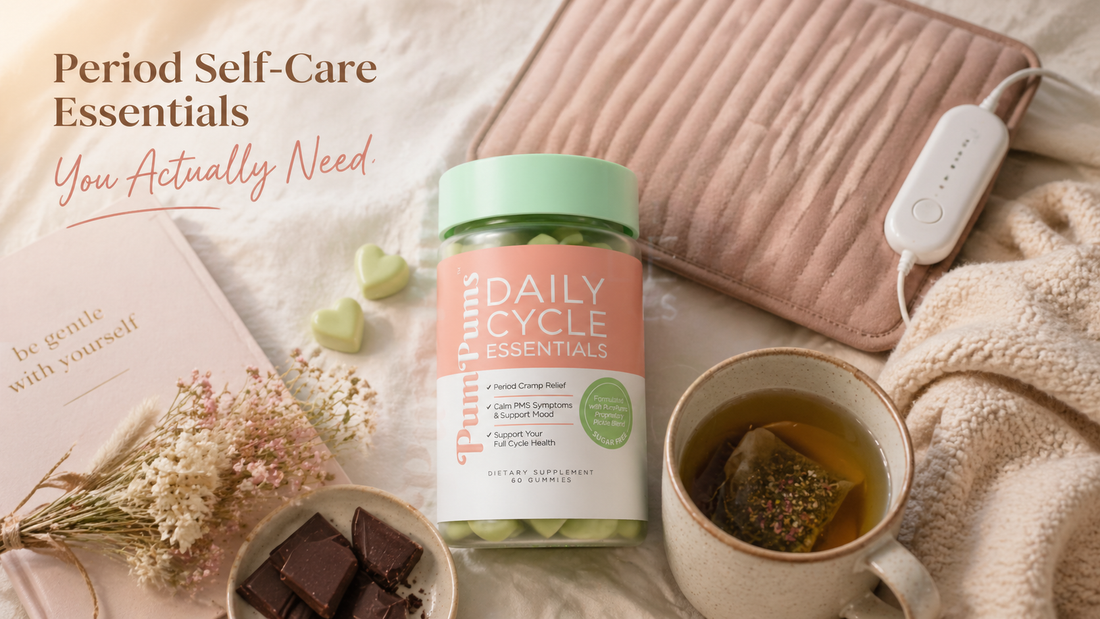
PumPums Period Cramp Relief is one of the standout period pain relief products of 2026. Formulated as easy-to-take gummies, PumPums uses a blend of magnesium, ginger extract, and vitamin B6—ingredients with real evidence behind them for reducing prostaglandin-driven cramping and easing the tension that makes cramps worse. Unlike NSAIDs, which can irritate the stomach with frequent use, PumPums offers a gentler daily option that won't punish your gut.
Step 2: Support Your Cycle All Month Long
Cramp relief on the days you need it is essential—but the most effective period self-care routines work throughout the entire cycle, not just during your period.
This is where cycle support supplements come in. Supporting your hormonal health between periods—during the luteal phase especially—can reduce the severity of PMS symptoms before they start.
Step 3: Manage Stress—It Matters More Than You Think
The connection between stress and the menstrual cycle is biochemical, not just anecdotal. High cortisol suppresses progesterone, which worsens cramping, intensifies mood swings, and can even delay ovulation—throwing off your whole cycle.
Practical stress management that fits real life:
-
Magnesium glycinate supports both muscle relaxation and cortisol regulation
-
10–15 minutes of daily movement—walking counts—reduces perceived pain sensitivity
-
Limiting alcohol and ultra-processed foods in the week before your period reduces inflammatory prostaglandin production
Step 4: Optimize Your Environment
Small environmental changes make a measurable difference:
-
Heat therapy (heating pad, adhesive heat patches) remains one of the most evidence-backed non-pharmacological cramp treatments
-
Sleep hygiene is especially important in the luteal phase when body temperature rises slightly and sleep quality dips
-
Hydration reduces bloating and can lessen headache intensity—aim for at least 64 oz of water daily during your period
The Best Period Gummies and Supplements in 2026: What to Look For
With the supplement market flooded with options, here's what separates effective natural cramp relief supplements from marketing noise:
| What to Look For | What to Avoid |
| Magnesium (glycinate or citrate form) | Proprietary blends with no disclosed doses |
| Vitamin B6 (up to 100mg/day) | Excessive added sugars (>5g per serving) |
| Ginger or turmeric extract | Unverified "hormone balancing" claims with no science |
| Third-party tested | No clear expiration or batch information |
| Transparent ingredient labeling | Celebrity endorsement as the primary selling point |
Common Mistakes to Avoid
-
Waiting until the pain peaks. Pain management works best preventively. Starting your relief routine 1–2 days before your period is far more effective than scrambling once cramps are already intense.
-
Relying only on ibuprofen. NSAIDs are effective but not ideal for daily long-term use. Supplementing with targeted PMS relief products reduces your need for frequent OTC pain reliever use.
-
Ignoring the luteal phase. The two weeks before your period are when hormone-driven symptoms build. Treating only your period days leaves the underlying cause unaddressed.
-
Expecting overnight results from supplements. Supplements like magnesium and B6 typically need 2–3 cycles to show their full effect. Consistency matters.
-
Dismissing PMDD as "bad PMS." If your symptoms are severe or mood-related, get a proper evaluation. Supplements support health—they don't replace clinical care when it's needed.
Build a Routine That Actually Works
The best period care essentials 2026 aren't the ones with the flashiest packaging—they're the ones you'll actually use consistently, with ingredients that have science behind them.
Start with targeted cramp relief on the days you need it most. Build in daily cycle support for the bigger hormonal picture. Manage stress, prioritize sleep, and don't wait until you're in pain to take action.


