
Share
How Hormonal Acne Differs From Regular Acne
Quick answer: Hormonal acne shows up mainly along the jawline and chin, tends to flare in a predictable pattern the week before your period, and responds best to a consistent, gentle AM/PM routine built around non-comedogenic products, salicylic acid or niacinamide, and a barrier-supporting moisturizer — not aggressive over-treatment.
If your breakouts seem to appear like clockwork every month in the same spots, you're likely dealing with hormonal acne. It behaves differently from general acne, which means it also responds best to a slightly different approach.
Hormonal acne tends to follow a distinct pattern that sets it apart from acne caused by other triggers:
- Location: It concentrates along the jawline, chin, and lower cheeks — areas with a higher concentration of androgen-sensitive oil glands — rather than being spread evenly across the face.
- Timing: It flares in a cyclical pattern, typically in the week before your period, when a relative rise in androgen activity (as estrogen and progesterone drop) increases oil production.
- Texture: It often presents as deep, tender, cystic bumps beneath the skin rather than surface-level whiteheads, since the inflammation sits deeper in the follicle.
- Persistence: Individual breakouts often take longer to resolve and are more prone to leaving marks, because the deeper cystic type of blemish causes more tissue disruption.
Understanding this pattern matters because it explains why hormonal acne often doesn't respond well to the same aggressive, drying treatments that work for surface-level acne — and why it's closely tied to the same hormonal shifts we cover in how hormones affect mood before your period, since both mood and skin changes trace back to the same premenstrual hormone shift.
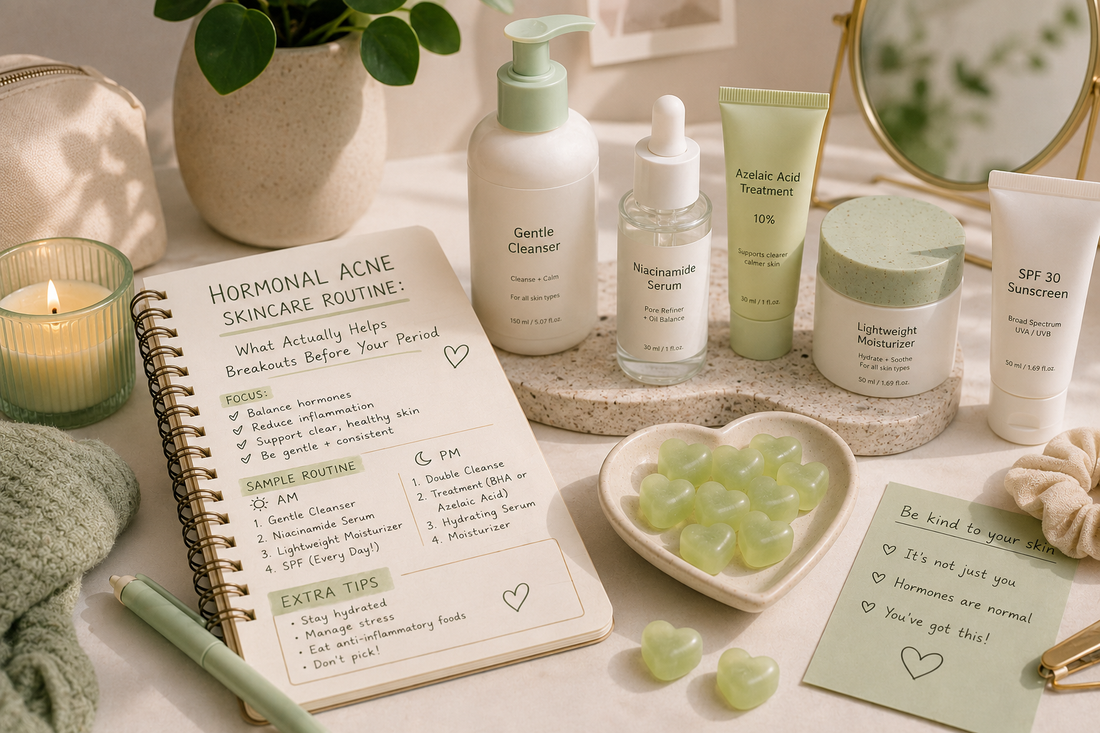
AM/PM Routine Framework
Morning Routine
- Gentle, pH-balanced cleanser — avoid harsh foaming cleansers that strip the skin, which can trigger a rebound in oil production.
- Niacinamide serum (around 5%) — supports a more balanced-looking complexion and helps calm visible redness without irritating already-inflamed skin.
- Lightweight, non-comedogenic moisturizer with ceramides — supports the skin barrier, which is often compromised by acne treatments.
- SPF 30+ — non-negotiable, especially since some acne treatments increase sun sensitivity, and unprotected sun exposure can darken post-acne marks.
Evening Routine
- Double cleanse if wearing makeup or SPF — an oil-based cleanser or micellar water first, followed by your gentle cleanser.
- One active treatment only — alternate between a salicylic acid treatment (helps clear pores and reduce surface oil) and a gentler option like azelaic acid on nights you're not using salicylic acid, to avoid over-treating the skin.
- Barrier-repair moisturizer — richer than your morning formula, to support overnight recovery.
Ingredients to Look For and Avoid
| Look for | Why | Avoid or use cautiously | Why |
|---|---|---|---|
| Salicylic acid (0.5–2%) | Exfoliates inside the pore, reduces oil buildup | Multiple strong actives layered together | Increases irritation and barrier damage, which can worsen breakouts |
| Niacinamide | Calms inflammation, supports barrier | Heavy, pore-clogging oils (coconut oil, cocoa butter in some formulations) | Can contribute to clogged pores in acne-prone skin |
| Azelaic acid | Gentle, reduces inflammation and marks | Harsh physical scrubs | Can worsen inflammation in already-irritated cystic acne |
| Non-comedogenic moisturizers with ceramides | Repairs barrier without clogging pores | Alcohol-heavy toners | Overly drying, can trigger rebound oil production |
| Mineral or chemical SPF (non-comedogenic) | Protects against dark marks and sun damage | Skipping moisturizer to "dry out" acne | Compromised barrier tends to worsen acne over time |
The general rule dermatologists point to: gentler, more consistent routines tend to outperform aggressive, ingredient-stacked ones for hormonal acne specifically, since over-treating irritated skin can trigger more oil production and prolong healing.
When to See a Dermatologist
Over-the-counter routines can meaningfully help mild to moderate hormonal breakouts, but it's worth booking a dermatology visit if you notice:
- Deep, painful cystic bumps that don't respond to 8–12 weeks of consistent OTC treatment
- Scarring or dark marks that are worsening over time
- Acne that's affecting your confidence or mental health significantly
- Breakouts alongside other symptoms like irregular periods, excess hair growth, or hair thinning, which can sometimes point to an underlying hormonal pattern worth discussing with a provider
A dermatologist can offer options like prescription topical retinoids, spironolactone, or other treatments not available over the counter — often achieving more consistent, faster results for stubborn cystic hormonal acne.
Frequently Asked Questions
Why do I only break out on my chin and jawline?
These areas have a higher density of androgen-sensitive oil glands, which is why premenstrual androgen shifts tend to show up there specifically, rather than across your whole face.
Can niacinamide and salicylic acid be used together?
Yes, they're generally considered compatible and are often used in the same routine — niacinamide in the morning and salicylic acid in the evening is a common, well-tolerated combination.
Does diet affect hormonal acne?
Some research links high-glycemic diets and dairy to acne flares in certain individuals, though the connection varies by person. A generally balanced diet supports overall skin health, but skincare routine and hormonal factors tend to have the biggest direct impact.
How long does it take to see results from a new hormonal acne routine?
Give any new routine at least 8–12 weeks before judging its effectiveness, since skin cell turnover and inflammation resolution take time. Switching products too frequently can actually set back progress.
Should I pop hormonal acne cysts?
No. Cystic acne sits deep beneath the skin, and popping it tends to worsen inflammation, prolong healing, and increase the risk of permanent scarring.
Can birth control help hormonal acne?
Some hormonal birth control methods are used to help manage hormonal acne by stabilizing androgen fluctuations, but this is a decision to make with your healthcare provider based on your full health picture, not a first-line skincare fix.
Key Takeaways
- Hormonal acne concentrates on the jawline and chin and flares predictably before your period.
- A gentle, consistent AM/PM routine with niacinamide and salicylic acid or azelaic acid outperforms aggressive over-treatment.
- Avoid layering too many strong actives at once — it can worsen inflammation and prolong healing.
- Give any new routine 8–12 weeks before evaluating results.
- See a dermatologist for cystic acne, scarring, or breakouts alongside other hormonal symptoms.
Related Reading
- Is Period Acne Different From Regular Acne? Understanding the Connection Between Hormones and Breakouts
- How Hormones Affect Mood Before Your Period
- Signs of Hormonal Imbalance Women Often Miss
Explore our full collection or shop Daily Cycle Essentials to support your skin and cycle together.
This article is for general informational purposes and is not a substitute for medical advice. Talk to your healthcare provider about any new supplement or routine, especially if you have an existing health condition.


