
Compartir
Food questions come up fast once someone connects PMOS — polyendocrine metabolic ovarian syndrome, formerly known as PCOS — to insulin resistance. That makes sense, since blood sugar swings can make every other symptom louder, from cravings to fatigue to weight gain. But the goal here isn't a list of forbidden foods. It's understanding which foods work against insulin sensitivity, and which support it, so you can make informed swaps instead of white-knuckle restriction.
Foods That Work Against Insulin Sensitivity
Should I avoid refined carbs and sugar with PMOS?
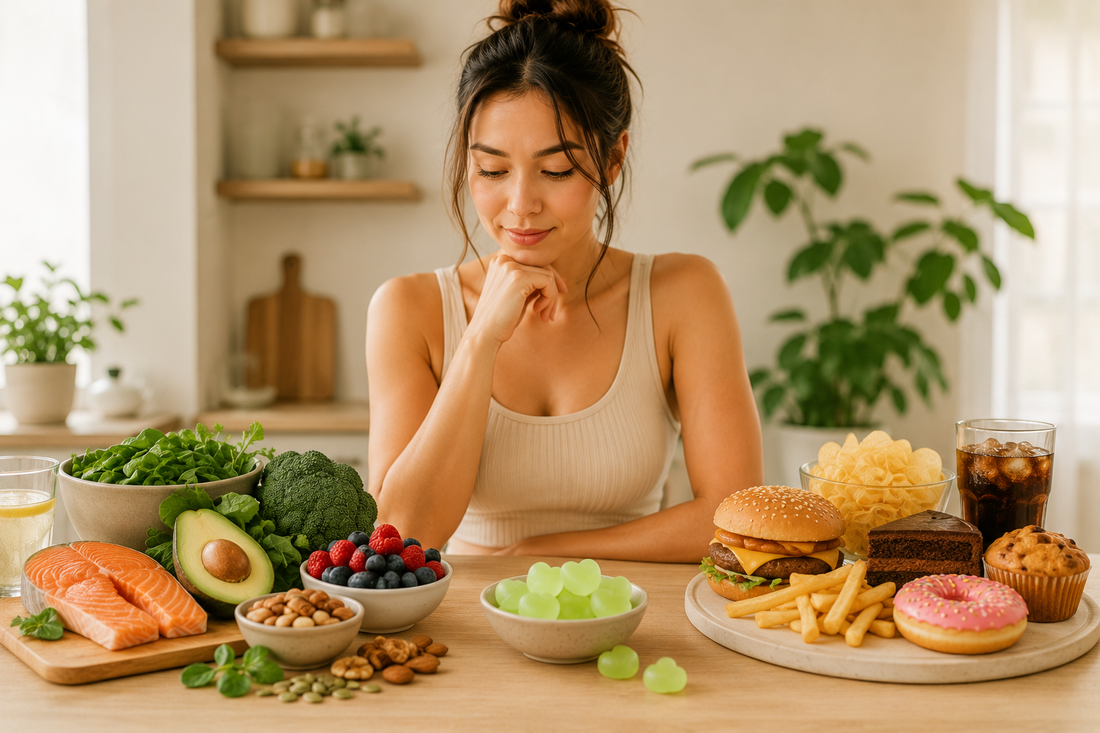
Refined carbohydrates and added sugar — white bread, pastries, sugary drinks, candy — spike blood sugar quickly, which triggers a corresponding insulin spike. For someone managing PMOS, this spike-and-crash pattern can intensify cravings, fatigue, and the broader hormonal cascade tied to insulin resistance. Pairing carbs with protein or fat, or swapping to whole grains, slows that response considerably.
Are processed and fried foods bad for PMOS?
Highly processed and fried foods tend to be high in trans fats and low in fiber, both linked to increased systemic inflammation. Inflammation is increasingly recognized as a contributing factor in PMOS alongside the metabolic and reproductive dimensions, which is part of why an anti-inflammatory eating pattern is often recommended.
Does alcohol affect PMOS symptoms?
Alcohol affects liver function and blood sugar regulation, and frequent or heavy intake also disrupts sleep quality, which compounds insulin resistance through the cortisol-insulin relationship. Occasional drinking isn't typically the concern for most people; frequency and volume are what matter most.
What "healthy" foods are secretly high in sugar?
Flavored yogurts, granola bars, bottled smoothies, and many cereals marketed as "natural" or "wholesome" often carry more added sugar than their packaging implies. Checking the nutrition label for grams of added sugar, rather than relying on front-of-package claims, catches most of these hidden sources.
What about high-glycemic fruits and snacks?
Fruits like watermelon and very ripe bananas have a higher glycemic impact than berries or apples, though fruit in general is far less concerning than refined sugar sources. Pairing higher-glycemic fruit with protein or fat, such as nut butter, helps blunt the blood sugar response.
Building a PMOS-Friendly Eating Pattern
What foods help with PMOS?
High-fiber vegetables, lean protein, healthy fats like olive oil and avocado, and complex carbohydrates like oats, quinoa, and legumes all support steadier blood sugar and improved insulin sensitivity over time. The period relief recipe hub has cycle-friendly meals built around these same principles.
Does meal timing matter for PMOS?
Spacing meals to avoid long gaps followed by large meals can help prevent the blood sugar swings that worsen insulin resistance. Starting meals with protein or fiber before carbohydrates is a simple, well-studied strategy for blunting post-meal glucose spikes.
Are anti-inflammatory foods important for PMOS?
Foods rich in omega-3 fatty acids (like fatty fish and walnuts), colorful vegetables, and spices like turmeric and ginger are commonly included in anti-inflammatory eating patterns associated with improved PMOS symptom management, though no single food acts as a cure on its own.
Cravings, especially in the days leading up to your period, deserve their own conversation — they're hormonal, not a willpower issue. We cover that connection in how hormones drive mood swings and sugar cravings.
Lifestyle and nutrition guidance here aligns with the 2023 International Evidence-based Guideline for PCOS, which notes there's no single "best" diet for the condition — the priority is a sustainable, individualized pattern that supports insulin sensitivity over time, not a restrictive one-size-fits-all approach.


