
Compartir
After 30, your body begins a gradual shift in reproductive hormones — primarily estrogen and progesterone — that can intensify PMS symptoms, increase period pain, disrupt your cycle length, and affect your mood and energy levels. These changes are normal but manageable with the right cycle support supplements and period care essentials in 2026.
What's Actually Happening to Your Hormones After 30?
Your 30s are not your 20s — and your menstrual cycle feels it first.
In your 20s, your body typically maintains a relatively stable hormonal rhythm: estrogen rises in the first half of your cycle, triggers ovulation, then progesterone takes over in the second half. It's not perfect, but it's predictable enough.
After 30, that balance starts to shift. Progesterone levels can begin to decline earlier and more steeply in the luteal phase (the week or two before your period). At the same time, estrogen can fluctuate more dramatically — sometimes spiking higher before dropping. This imbalance, often called estrogen dominance, is one of the main drivers behind worsening PMS symptoms in your 30s and 40s.
If spring allergies or seasonal transitions seem to throw off your whole cycle — a phenomenon some practitioners describe as hormone changes in spring — that's not a coincidence. Cortisol and environmental shifts can temporarily disrupt the hypothalamic-pituitary-ovarian (HPO) axis, the hormonal command center that governs your menstrual cycle.
Why This Matters More Than You Think
Hormone imbalance isn't just a matter of "feeling a little off." Left unaddressed, shifting hormones in your 30s can escalate into more serious conditions, affect fertility, and significantly impact your quality of life.
Here's what's at stake:
Worsening Period Pain When progesterone drops too fast or estrogen spikes too high, your uterus produces more prostaglandins — the compounds that trigger cramps. This is why many women in their 30s find their cramps getting noticeably worse and start actively searching for period pain relief products that actually work.
PMS vs. PMDD — Knowing the Difference Premenstrual Syndrome (PMS) affects up to 75% of menstruating women and includes physical and emotional symptoms in the days before your period. Premenstrual Dysphoric Disorder (PMDD) is a more severe clinical condition affecting roughly 3–8% of women, marked by debilitating mood changes, anxiety, depression, and physical pain that significantly interfere with daily functioning. If your symptoms feel extreme — especially in your mid-to-late 30s — it's worth talking to a healthcare provider about whether you're dealing with PMS vs. PMDD.
Stress and Your Menstrual Cycle This one is huge and often overlooked. Chronic stress elevates cortisol, which directly competes with progesterone and suppresses it further. The relationship between stress and your menstrual cycle is bidirectional: a stressful month can delay or intensify your period, and a painful period increases your stress levels. It becomes a cycle within a cycle.
Step-by-Step: How to Support Your Hormones After 30
Getting your hormones back in balance doesn't require a complete lifestyle overhaul. It requires consistency in the right areas.
Step 1: Track Your Cycle (Seriously)
Before you can address hormonal imbalance, you need data. Use a period tracking app to log your cycle length, symptom severity, energy levels, mood, and sleep. After two to three cycles, patterns will emerge — and you'll know exactly when to front-load your self-care.
Step 2: Build a Period Self-Care Routine
A period self-care routine isn't a luxury — it's a strategy. In the week before your period, prioritize:
-
Reducing processed sugar and refined carbs (both spike inflammation)
-
Increasing magnesium-rich foods like dark leafy greens, seeds, and dark chocolate
-
Cutting back on caffeine and alcohol, which both worsen hormonal swings
-
Prioritizing 7–9 hours of sleep, especially in the luteal phase
Step 3: Address Cramps Before They Peak
Waiting until you're in pain to reach for cramp relief is reactive. Being proactive is better — and smarter.
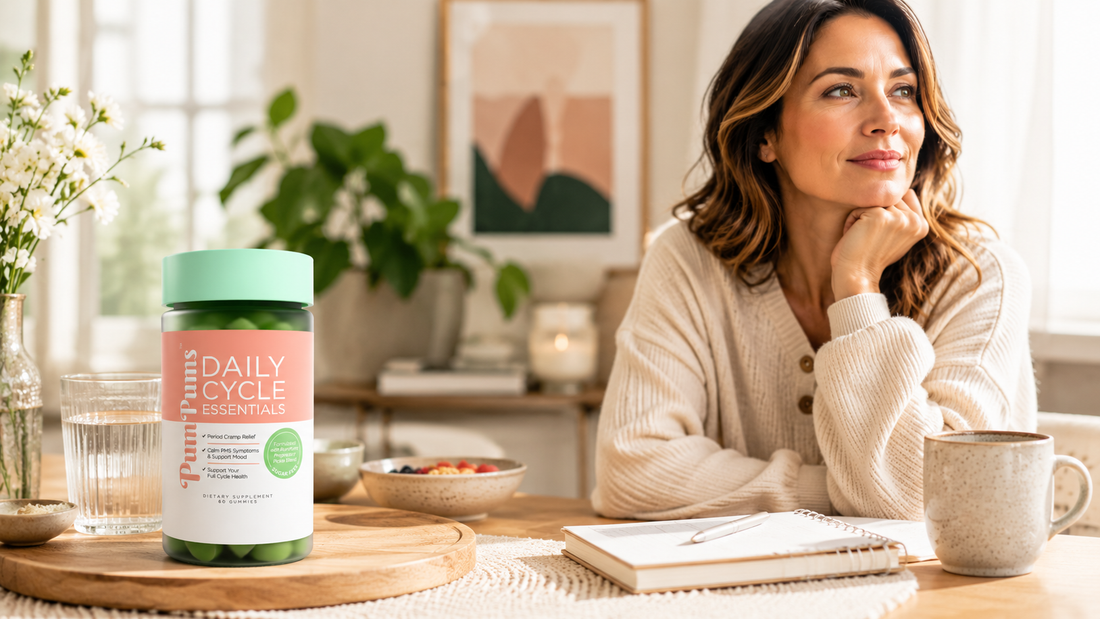
PumPums Daily Cycle Essentials is one of the standout PMS relief products of 2026 precisely because it works with your body, not against it. Formulated with clinically studied natural ingredients — including ginger root, chasteberry (Vitex), and magnesium — it targets the root causes of cramps and PMS rather than just masking pain. It's fast-acting, easy to take, and designed for women in their 30s whose bodies are no longer responding to the same old approaches.
If you've been searching for natural cramp relief supplements that don't leave you feeling groggy or dependent on ibuprofen every month, PumPums Daily Cycle Essentials deserves a place in your routine.
Step 4: Add Targeted Cycle Support Supplements
Beyond managing active symptoms, supporting your hormonal foundation throughout the entire month matters. This is where cycle support supplements come in.
PumPums Daily Cycle Essentials has been built for exactly this — daily nutritional support that helps regulate the hormonal shifts your body goes through across all four cycle phases. Think of it as your hormonal baseline. When your foundation is steady, your PMS symptoms are less intense, your cramps are more manageable, and your energy is more consistent.
Step 5: Move Your Body (But Don't Overdo It)
Exercise is one of the most effective natural tools for hormonal balance — but intensity matters. High-intensity training in the late luteal phase (just before your period) can spike cortisol and worsen symptoms. Instead, shift toward yoga, walking, or Pilates in the days before your period. Reserve HIIT and strength work for the follicular phase (after your period ends), when estrogen is naturally rising and your body is primed for it.
Common Mistakes Women Make After 30
Mistake 1: Assuming it's just "getting older" Worsening PMS and period pain after 30 is common — but it's not inevitable, and it's not something you have to just live with. It's a signal your body is sending. Listen to it.
Mistake 2: Relying only on painkillers NSAIDs like ibuprofen are fine for acute relief, but they don't address the hormonal imbalance driving your symptoms. Building a supplement routine with the best supplements for PMS — like magnesium, Vitex, and B6 — creates lasting change rather than monthly crisis management.
Mistake 3: Ignoring stress as a hormonal factor The connection between stress and the menstrual cycle is not just wellness talk — it's endocrinology. If you're not managing cortisol, you're fighting your cramps and PMS with one hand tied behind your back.
Mistake 4: Taking supplements inconsistently Hormonal support supplements — including the best period gummies of 2026 — need time and consistency to show results. Most women notice meaningful improvement after two to three full cycles of consistent use.
Mistake 5: Going it alone If your symptoms are severe, especially if they're affecting your work, relationships, or mental health, please talk to a gynecologist or endocrinologist. Hormonal imbalance is a medical issue, and there's no award for suffering through it silently.
Your 30s Are a Turning Point, Not a Dead End
Hormonal changes after 30 are real, they're normal, and — most importantly — they're manageable. Your symptoms aren't random, they're not in your head, and you don't have to just push through them every month.
The right combination of daily support, targeted cramp relief, lifestyle adjustments, and consistent self-care can meaningfully change how your cycle feels. Start with what you can control today: your routine, your supplements, your stress levels, and the products you trust.
PumPums Daily Cycle Essential is built for exactly where you are right now — a woman in her 30s who knows her body is changing and wants real solutions, not generic advice.


