
Compartir
You snap at someone you love over something small. You cry at a commercial. You feel a wave of anxiety about nothing in particular, and then, a few days later, your period arrives and everything lifts. Sound familiar?
If you've ever felt like a different version of yourself in the week or two before your period, you're not imagining it, and you're definitely not "crazy." The emotional symptoms of PMS are among the most disruptive experiences women deal with throughout their menstrual cycle, and they're driven by real, measurable hormonal changes happening in your brain and body.
Understanding what's actually going on beneath the surface is the first step toward getting real relief. And more women across the United States are realizing that relief doesn't have to wait until things fall apart each month.
Why PMS Affects Your Emotions (It's Not in Your Head)
The emotional side of PMS gets dismissed far too often. But the science is clear: the hormonal changes during your menstrual cycle directly impact the brain chemicals that regulate your mood, stress response, and emotional resilience.
Here's what's happening during the luteal phase (the two weeks between ovulation and your period):
Estrogen drops. Estrogen has a powerful relationship with serotonin, the neurotransmitter responsible for feelings of happiness, calm, and emotional stability. When estrogen falls in the second half of your cycle, serotonin production can dip with it. Less serotonin means lower mood, more emotional sensitivity, and a shorter fuse.
Progesterone rises, then crashes. Progesterone has a calming, sedative-like effect through its interaction with GABA receptors in the brain. During the luteal phase, progesterone rises and then falls sharply right before your period. That sudden drop removes a key source of nervous system regulation, often triggering anxiety, restlessness, and sleep disruption.
Cortisol becomes harder to manage. Because stress and menstrual cycle health are deeply connected, high-stress lifestyles can amplify every PMS symptom. Cortisol competes with progesterone at receptor sites, meaning when stress is high, your body's ability to buffer emotional swings goes down.
These aren't personality flaws or weaknesses. They are physiological events that deserve real, consistent support.
The Most Common Emotional Symptoms of PMS
Every woman's experience is different, but the emotional symptoms that tend to show up most often in the luteal phase include:
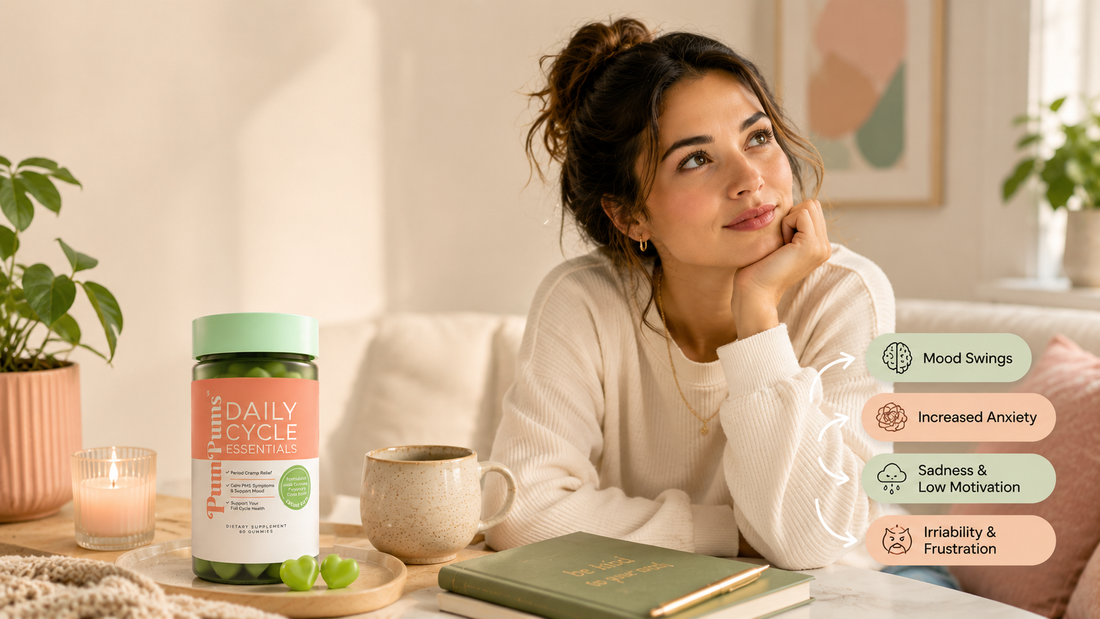
- Mood swings that feel sudden and disproportionate to the situation
- Irritability that makes even small frustrations feel overwhelming
- Anxiety that shows up as worry, restlessness, or a general sense of dread
- Emotional sensitivity where criticism, conflict, or disappointment hits harder than usual
- Sadness or low mood that doesn't have an obvious cause
- Feeling overwhelmed by responsibilities that normally feel manageable
- Social withdrawal and a desire to isolate from people and activities you normally enjoy
- Difficulty concentrating and brain fog that affects work and decision-making
- Low self-esteem or negative self-talk that intensifies in the days before your period
These symptoms can range from mildly annoying to seriously disruptive. For some women, they significantly affect relationships, job performance, and overall quality of life every single month. That's not "just PMS." That's something worth addressing with real menstrual cycle support.
Read More: How Hormones Affect Mood Before Your Period
How Hormone Fluctuations Affect More Than Just Your Mood
The emotional symptoms of PMS don't exist in isolation. They show up alongside a whole cluster of physical changes that make everything harder to cope with.
- Fatigue is one of the biggest contributors to emotional fragility. When you're running on poor sleep and low energy, your emotional reserves are depleted. Progesterone fluctuations disrupt melatonin production and body temperature regulation, which is why so many women struggle to sleep well in the week before their period. Poor sleep then lowers your threshold for stress, irritability, and emotional overwhelm, creating a cycle that feeds itself.
- Cravings and blood sugar swings also play a direct role in mood. In the luteal phase, changes in estrogen and progesterone affect insulin sensitivity, driving cravings for sugar and carbohydrates. These quick-energy foods cause blood sugar spikes and crashes that destabilize mood throughout the day.
- Bloating and physical discomfort add another layer. It's harder to feel emotionally steady when you're physically uncomfortable, puffy, and in pain. The body and mind are not separate systems, and physical PMS symptoms feed directly into emotional ones.
- Hormonal acne can affect confidence and self-image in the luteal phase, adding to the emotional weight that many women carry quietly before their periods.
Understanding why periods cause fatigue and mood swings, and how all of these symptoms interconnect, is what makes a whole-cycle approach to women's hormone health so much more effective than treating each symptom individually.
What Helps PMS Emotional Symptoms Naturally
The good news is that the emotional symptoms of PMS are not inevitable in their severity. There are well-researched nutritional and lifestyle strategies that make a real difference in how you feel across your cycle.
- Support serotonin production. Vitamin B6 is essential for serotonin synthesis. Getting enough through diet or supplementation can meaningfully reduce mood-related PMS symptoms, including irritability, sadness, and emotional sensitivity.
- Stabilize your nervous system with magnesium. Magnesium supports GABA activity in the brain, the same receptor system that progesterone interacts with. Studies consistently show that magnesium can reduce anxiety, improve sleep, and ease the emotional intensity of PMS.
- Address inflammation. Omega-3 fatty acids have been shown to support mood regulation and reduce the inflammatory processes that worsen both physical and emotional PMS symptoms.
- Regulate your stress response. Adaptogens like ashwagandha help the body manage cortisol more effectively, which reduces how much stress amplifies your PMS symptoms. A consistent stress management practice, whether that's walking, breathwork, or simply building recovery time into your week, supports a more stable emotional experience across your cycle.
- Support hormone balance with botanicals. Herbs like chasteberry (Vitex agnus-castus) have meaningful research behind them for PMS symptom relief, particularly for mood-related symptoms and luteal phase irregularities. Dong quai and other hormone-supportive herbs have been used traditionally to support menstrual health and cycle regularity.
- Prioritize sleep hygiene in your luteal phase. Reducing screen time, caffeine, and alcohol in the two weeks before your period can significantly improve sleep quality and, by extension, emotional resilience.
The key across all of these approaches is consistency. A hormone-friendly wellness routine doesn't just kick in on day one of your period. It works quietly in the background, every day of your cycle, so that when the luteal phase arrives, your body has the resources to move through it without falling apart.
Why More Women Are Choosing Daily Cycle Support
Across the United States, something important is shifting in how women think about their menstrual health. Search trends for mood support during PMS, best supplements for PMS, and hormone balance support have grown significantly as women move away from "just surviving" their cycle and toward genuinely understanding and supporting it.
Women in their twenties, thirties, and forties are tracking their phases, reading about their hormones, and seeking out daily supplements for menstrual wellness that address the full picture. They're recognizing that cycle irregularities, heavy periods, and debilitating emotional symptoms are not things they simply have to endure. They're worth addressing, proactively and consistently.
This is the philosophy behind PumPums Daily Cycle Essentials. Rather than a one-time fix for cramp days, it's designed as a daily supplement formulated to support hormone balance, mood, energy, and cycle comfort throughout all four phases. For cycle support supplements for busy women who don't have time to manage a complicated stack of products, PumPums offers a single, consistent daily foundation built around the full menstrual cycle, not just the days you're bleeding.
Read More: Signs of Hormonal Imbalance Women Often Miss
Supporting Yourself and Your Relationships During PMS
One of the most underappreciated impacts of PMS emotional symptoms is what they do to your closest relationships. Irritability and emotional sensitivity during the luteal phase don't just affect how you feel internally. They shape how you communicate, how you respond to conflict, and how connected or disconnected you feel from the people around you.
This isn't a personal failure. It's biology. But it does mean that supporting your emotional health during PMS is also an act of care for your relationships and your life outside of yourself.
Communicating openly with partners and loved ones about the way your cycle affects your emotional experience can make a significant difference. Building in extra self-compassion, lighter social commitments, and dedicated rest time during your luteal phase is not indulgent. It's smart, cycle-aware self-care.
Supporting your body with the right nutrients and a consistent menstrual self-care routine means showing up more fully for yourself and everyone around you, not just in the days after your period starts, but throughout the whole month.
Your Emotions During PMS Deserve More Than Just Coping
You deserve to feel like yourself for more than two weeks out of every month. You deserve to move through your luteal phase without dreading every conversation, without snapping at people you love, and without feeling like your emotional life is held hostage by your hormones.
The emotional symptoms of PMS are real. They're valid. And they can be meaningfully supported with the right daily care.
It starts with understanding your cycle. It continues with giving your body what it needs, every day.
Shop PumPums Daily Cycle Essentials and build the kind of daily foundation that supports your mood, your hormones, your energy, and your overall wellbeing all month long, not just when symptoms demand your attention.
Because you're not too sensitive. You're not overreacting. You're a woman with a cycle that deserves consistent, thoughtful support, starting today.


