
Compartir
Cycle syncing is the practice of aligning your work, exercise, nutrition, and social plans with the hormonal phases of your menstrual cycle. But what happens when you share a home, calendar, or business with a partner? Many women ask whether it’s possible to honor their cyclical needs without disrupting their partner’s routine.
The short answer: yes, it is possible—and it often improves communication, reduces conflict, and strengthens emotional connection. Research shows that up to 80–90% of women experience noticeable premenstrual symptoms, and about 5–8% experience severe symptoms consistent with PMDD. Hormonal shifts can influence mood, energy, sleep, and cognitive performance. When both partners understand this rhythm, daily life becomes easier to plan and navigate.
What Does It Mean to Sync Your Cycle With Your Partner’s Routine?
Cycle syncing with your partner does not mean expecting them to live according to your hormones. It means increasing awareness of your cyclical patterns and communicating needs in a way that works for both people.
It involves:
- Planning high-energy activities during your follicular and ovulatory phases
- Scheduling quieter time or fewer commitments during your late luteal phase
- Adjusting shared responsibilities when energy dips
- Using supportive products to reduce physical discomfort
- Being proactive about communication before tension builds
Instead of reacting to mood shifts or fatigue, you plan for them.
Why Hormonal Phases Affect Relationships
Your menstrual cycle typically has four phases:
1. Menstrual Phase (Days 1–5)
Energy is often lower. Many women report increased need for rest and solitude. Estrogen and progesterone are at their lowest during this time, which can affect motivation and mood.
This is also when cramps and lower back discomfort are most common. According to the American College of Obstetricians and Gynecologists (ACOG), more than 50% of menstruating women experience some degree of dysmenorrhea (painful periods). Physical discomfort can directly influence patience, sleep quality, and emotional bandwidth.
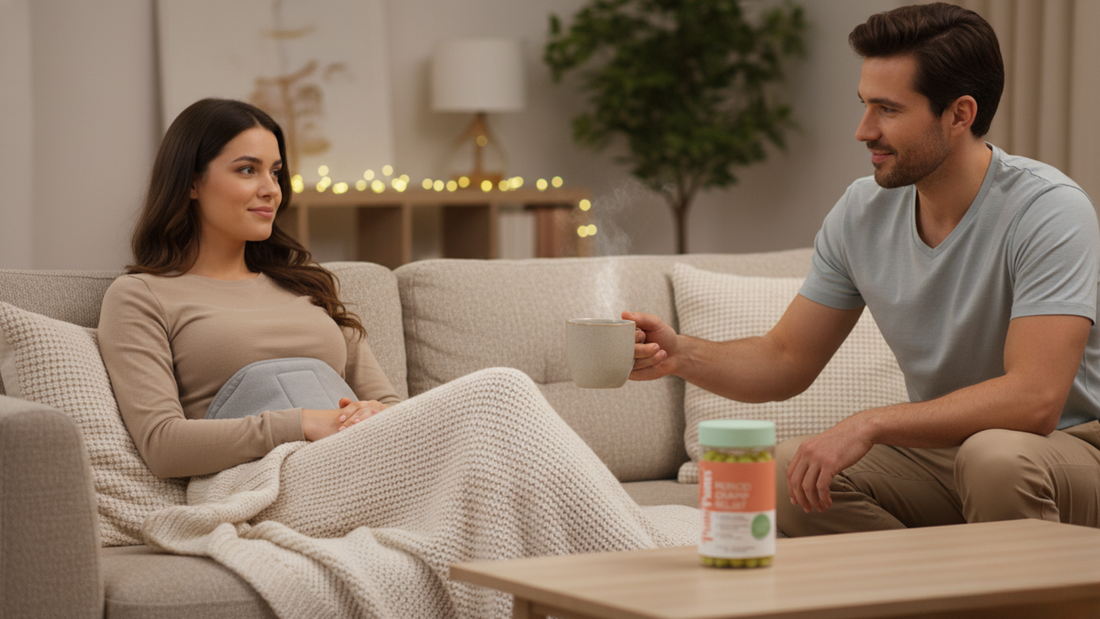
Using heat therapy during this phase can help relax uterine muscles and reduce cramping. Wearable heating pads like PumPums Period Cramp Relief allow you to manage pain while staying mobile, which can make it easier to maintain shared responsibilities without overexerting yourself.
2. Follicular Phase (Days 6–14)
Estrogen rises, often improving focus and social energy. Research shows cognitive flexibility and verbal fluency tend to improve as estrogen increases.
This is often a good window for:
- Planning dates
- Tackling joint projects
- Hosting social gatherings
3. Ovulatory Phase (Mid-cycle)
Estrogen peaks. Many women report feeling more confident, social, and communicative. Some research suggests relationship satisfaction and sexual desire may increase around ovulation due to hormonal shifts.
This can be an ideal time for:
- Important conversations
- Romantic planning
- Social commitments
4. Luteal Phase (Days 15–28)
Progesterone rises. Toward the late luteal phase, some women experience irritability, fatigue, bloating, and reduced stress tolerance. ACOG reports that about 75% of women experience at least one PMS symptom.
Understanding this pattern helps both partners interpret mood changes as physiological rather than personal.
How Do You Explain Cycle Syncing to Your Partner?
Many people ask: How do I talk to my partner about my cycle without it sounding like an excuse?
Keep it practical and team-oriented:
- Explain that hormonal shifts influence energy and stress tolerance.
- Share how you feel during each phase.
- Emphasize that planning reduces conflict.
You might say: I’ve noticed I have more energy mid-cycle and need more rest before my period. If we plan busy weekends earlier in the month, I’ll show up better.
If cramps significantly affect you, adding supportive tools like heat therapy or wearable relief options shows that you are taking responsibility for symptom management while asking for understanding.
How Can We Align Schedules Without Overcomplicating It?
You do not need a complex system.
Use a Shared Calendar
Mark approximate phases:
- Menstrual
- Follicular
- Ovulatory
- Luteal
Digital calendars allow subtle color coding so your partner is aware without it becoming the center of conversation.
Plan Around Energy Trends
Follicular + Ovulatory = Higher-energy window
- Social events
- Travel
- Big conversations
- Relationship check-ins
Late Luteal + Menstrual = Lower-energy window
- At-home evenings
- Simpler meals
- Fewer obligations
- Extra physical comfort measures
If cramps are predictable, planning lighter schedules during menstruation while using heat therapy like PumPums Period Cramp Relief can reduce cancellations and tension.
How Can Cycle Syncing Reduce Conflict?
Many couples notice repeated arguments before menstruation. Late luteal irritability is common due to hormonal sensitivity to stress.
Preventative steps:
- Avoid heavy financial or family discussions during PMS days
- Prioritize sleep
- Reduce overstimulation
- Communicate early about emotional bandwidth
If you experience strong cramps or fatigue, addressing the physical layer is important. Heat therapy is clinically recognized as an effective first-line treatment for menstrual pain because it improves blood flow and relaxes uterine muscles.
Managing pain reduces irritability triggered by discomfort.


